

ABOUT FIND0
A platform that offers automated income, expense tracking and goal-setting features, using a hook model to motivate users. It also provides options for Pay Later on loans and micro savings to help users manage their finances in different ways.
Role
Product Design
Duration
1 Day
Team
8
Industry
Fintech
THE TEAM

🧩PROBLEM STATEMENT
Rahul is a 26-year-old marketing professional who lives in Hyderabad. He loves to travel, shop, and try out new restaurants, but he often finds himself struggling to manage his finances. Although he earns a decent salary, but he never seems to have enough money at the end of the month. Rahul knows that he needs to start tracking his expenses, but finds it tedious and time-consuming.
In today's fast-paced world, we have many people like Rahul who are struggling to manage their personal finances and keep track of their income and expenses effectively. This challenge has not only led to poor spending habits and financial decision-making, but also had impact on how satisfied individuals are with their lives in general.
💡SOLUTION
We designed a digital expense-tracking platform that empowers people to take control of their spending habits. Addressing the insight that 52% of Indians do not track their income and expenses, the platform helps users build awareness, accountability, and healthier financial routines.
🎯GOAL
To find the hook to improve retention on the application.
🏆RESULT
Our team’s concept was awarded 1st place, emerging as the winning entry among 12 participating groups at the Designathon.
User Interviews
Design Strategy
Information Architecture
User Flows
Visual Design
Wireframes
Documentation
To better understand how Indians approach savings and financial habits, we analyzed insights from existing surveys.

To design with purpose, we first needed clarity on who we were creating for. Our secondary research revealed two distinct age groups that stood out, guiding us to shape the product around their needs.
To truly understand our users, we stepped out of assumptions and into conversations. We spoke face-to-face with 10 participants aged 21–30, listening to their everyday struggles with money and how they approach managing their finances. These stories not only validated some of our assumptions but also revealed new perspectives we hadn’t considered.
How do you keep track of your income and expenses?
What tools or methods do you currently use for budgeting? (apps, spreadsheets, pen & paper, mental tracking)
How often do you review your financial situation?
When do you typically make financial decisions - planned or spontaneous?
What financial apps or tools have you tried? What did you like/dislike about them?
How comfortable are you with managing finances digitally vs. traditional methods?
What would an ideal financial management tool look like for you?
How important is it to have all your financial information in one place?
How do you feel when you think about your financial future?
What motivates you to save or budget?
How do you handle financial setbacks or unexpected expenses?
Do you prefer to handle finances alone or involve family/partner?
Where do you go for financial advice or information?
Who do you trust when it comes to financial guidance?
How do you research before making financial decisions?
Tell me about the last major financial decision you made - what was your process?
Listening to our users brought new perspectives to light—yet many of their experiences resonated strongly with what we had already uncovered in our secondary research. This alignment gave us confidence that we were moving in the right direction.
participants had tried using digital platforms, but eventually gave up—relying only on spreadsheets.
struggled with making a budget in the first place and dint keep a track of expenses.
is the average amount all participants spend on a monthly basis.
of participants struggled to keep track of both digital and non-digital transactions.
The patterns in these insights pointed us toward a clearer path, helping us narrow our focus.
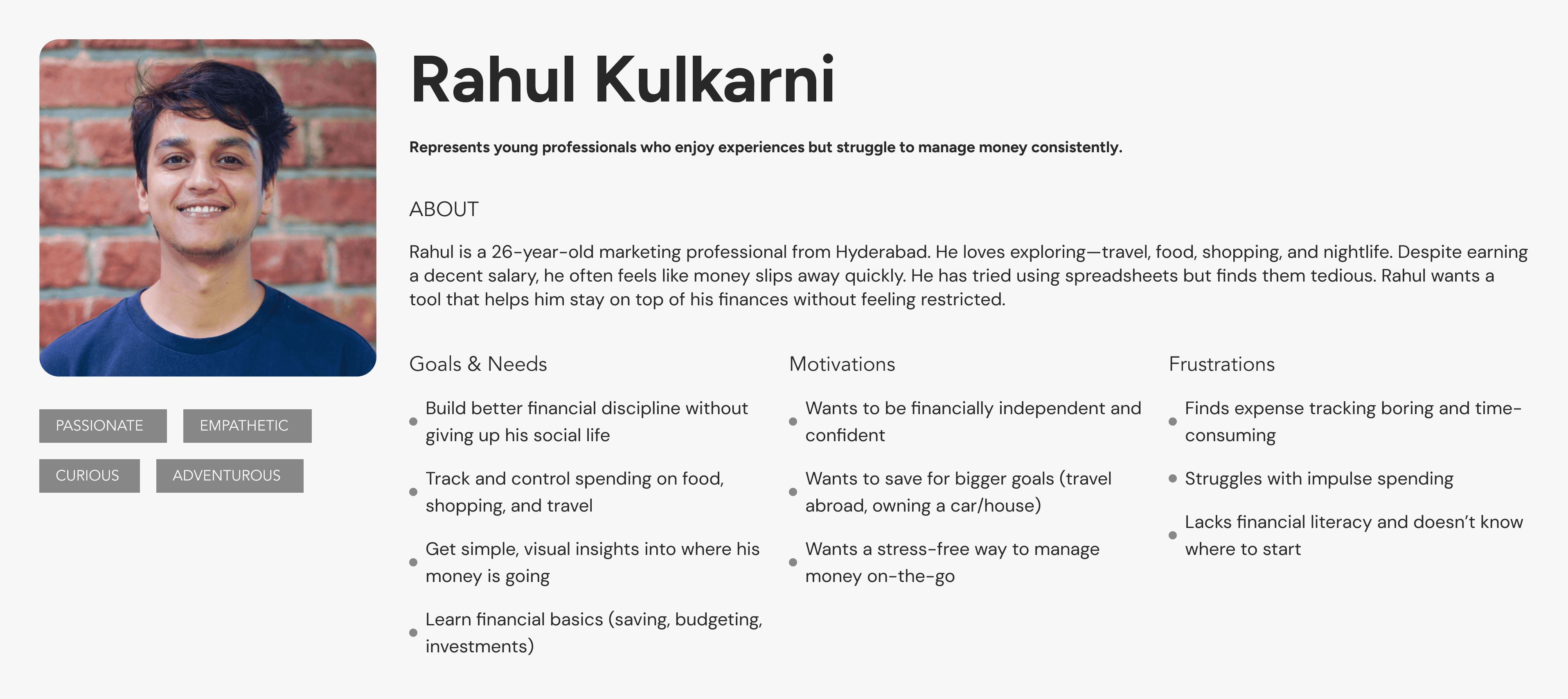
From our interviews, we shaped user personas that would guide our design decisions.

We translated our insights into a ‘How Might We’ statement, giving us one central focus and a springboard for solutions.
Studying competitors revealed what worked, what didn’t, and where we could stand out.

After using different Ideation templates to come up with ideas, we noted them down on sticky notes to use the Spider web mapping for shortlisting features for the application.


From many possibilities, we narrowed down to the most promising ones.
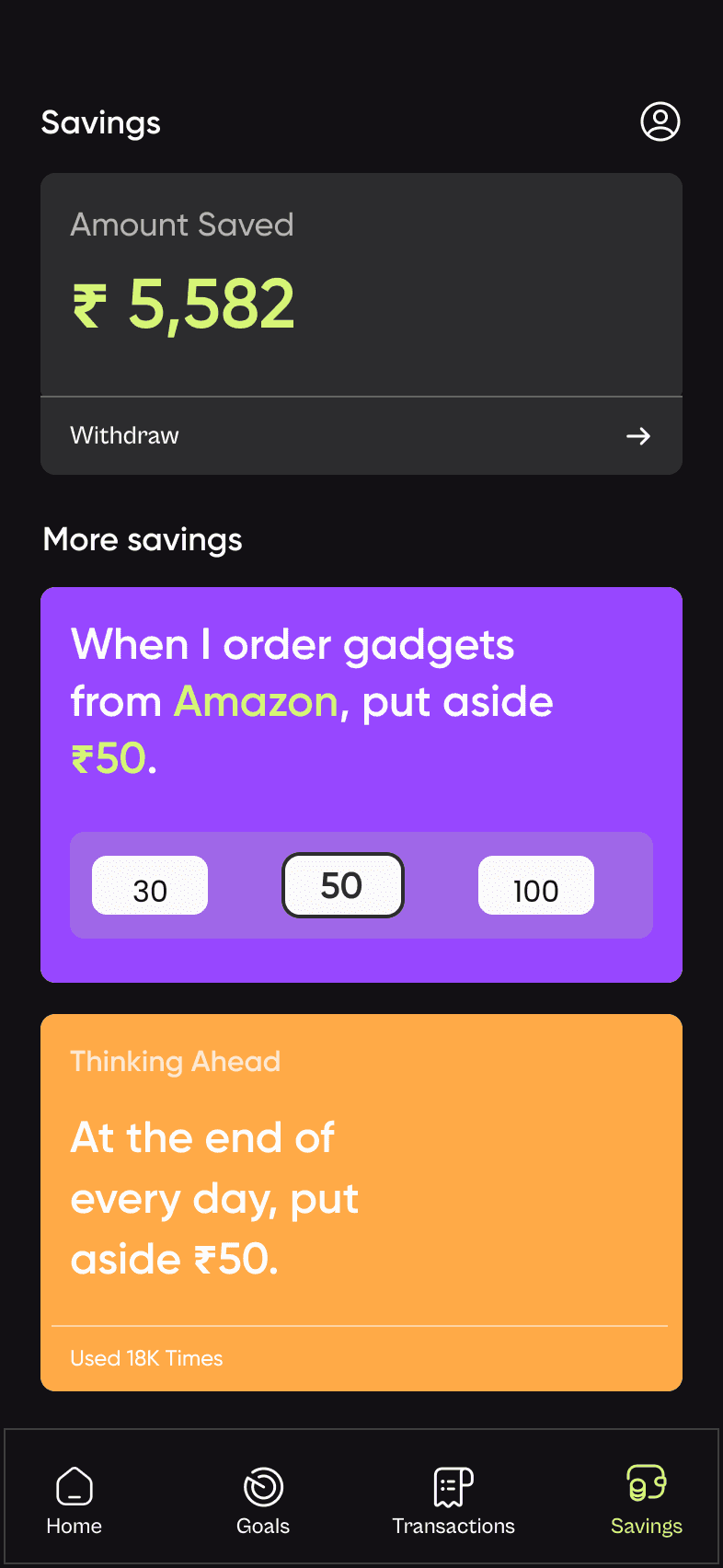
Whenever users spend on specific expenses, a little is automatically set aside for savings
Borrow seamlessly within the app, depending on your available credit
The app offers tailored tips to save more, spend less, and make smarter financial choices
It was important to strike a balance between business goals and user needs. While users benefit from financial support and rewards, the company sustains itself through loan interest and partnerships with vendors offering coupons.
By structuring the app, we brought clarity to our needs and a real view of how it should take shape.

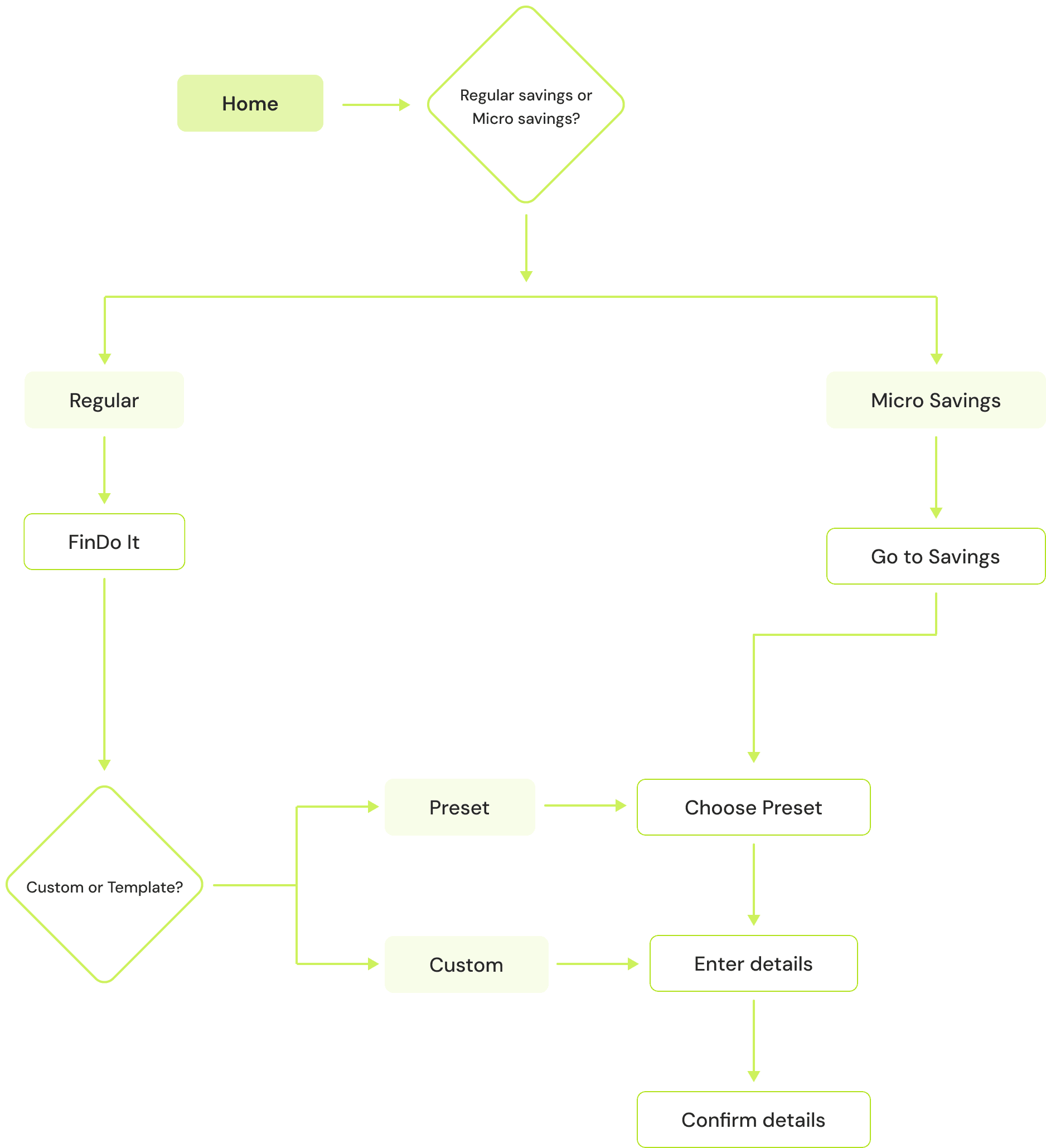
A simple flow was mapped to show how information connects and how users move through the app to complete tasks.
Colors and typography play a key role in conveying a brand’s message. Through multiple rounds of exploration and refinement, we narrowed it down to the choices below.

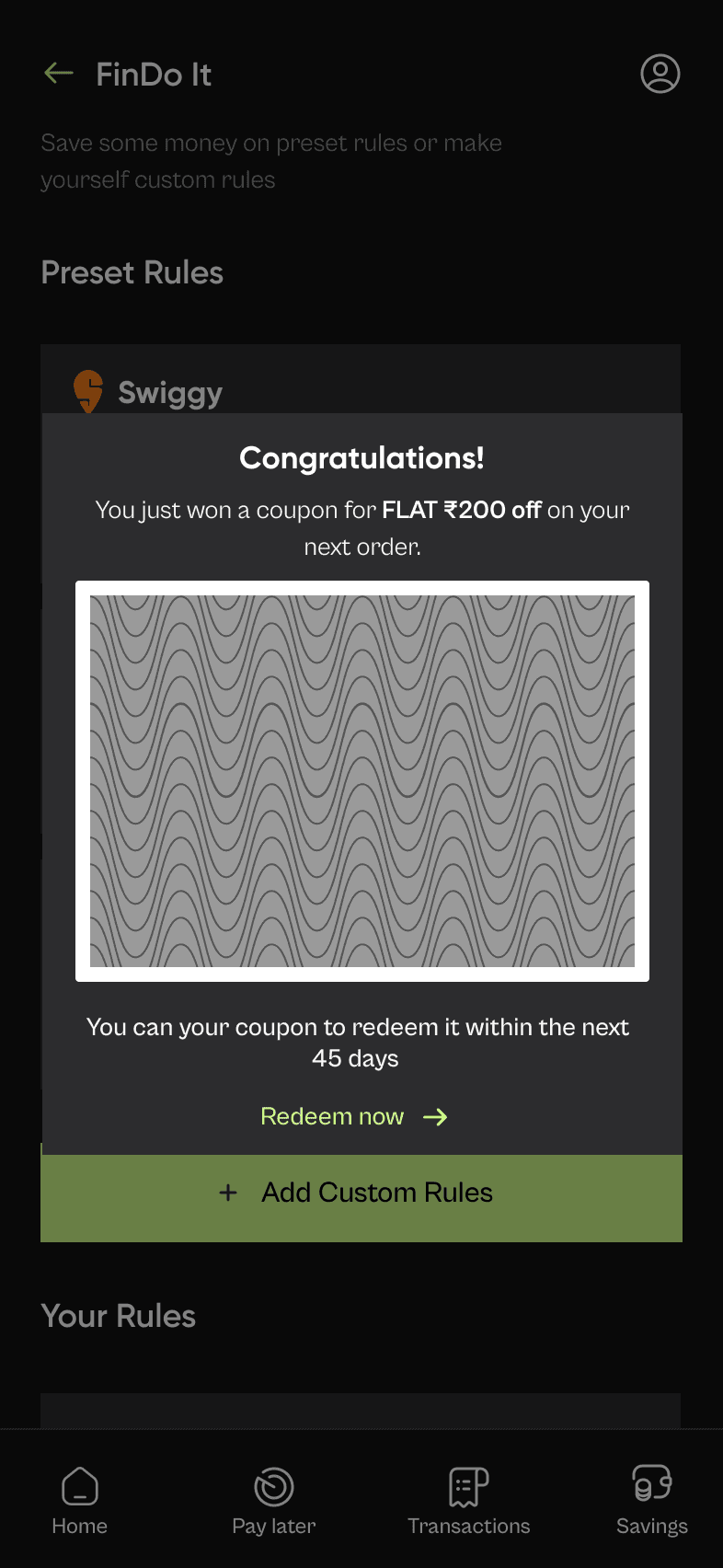
The final designs unify three core user needs—effortless tracking, automated savings, and flexible borrowing—into a single, cohesive experience.


Go to Prototype